Hidden in the Drizzle: Start Here for a Locked-Morgue Detective Mystery
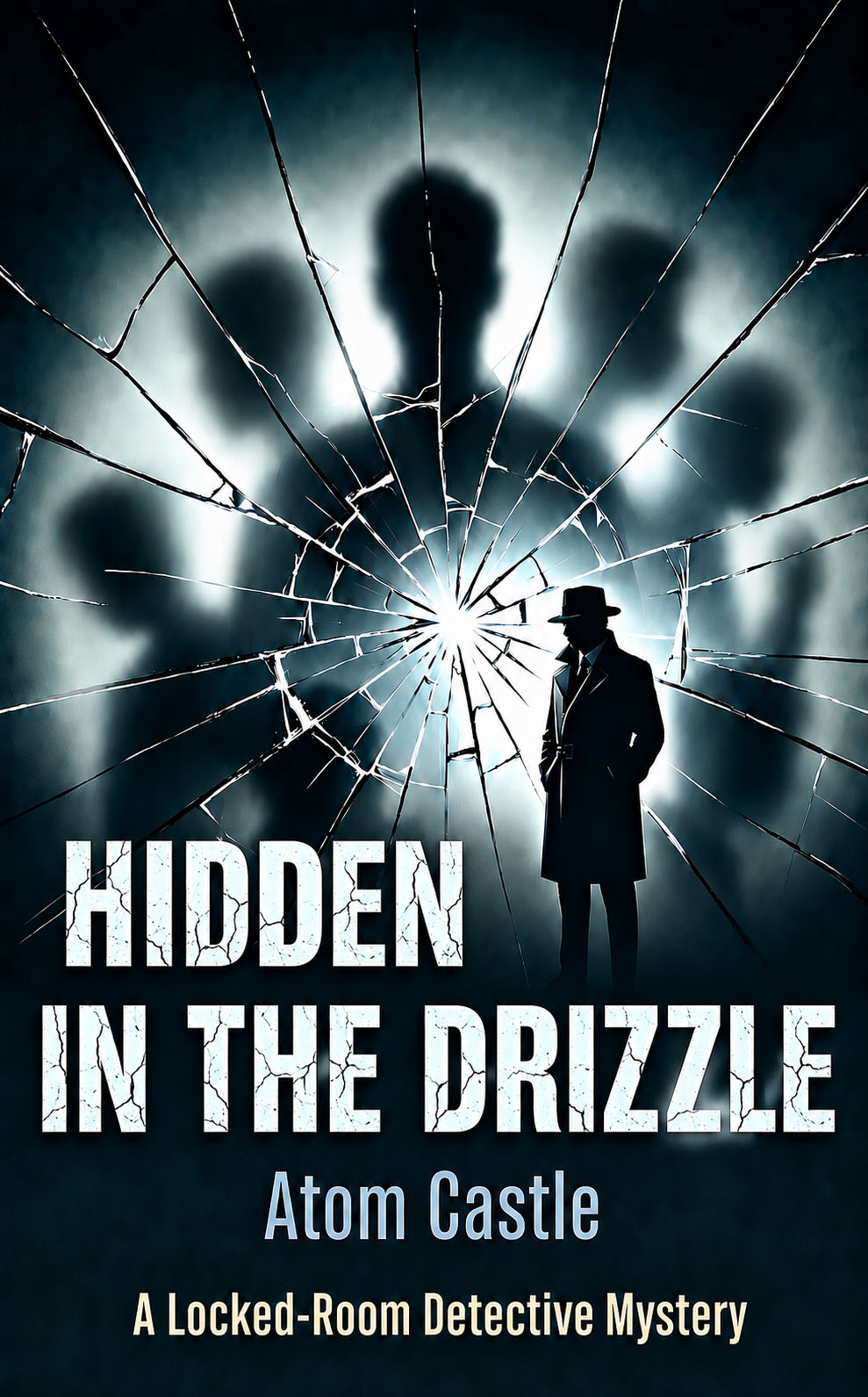
A suspect dies in police custody. Then his corpse disappears from a locked morgue. Detective Arthur Crow has to explain an event that should not have been possible.
That is the starting point of Hidden in the Drizzle by Atom Castle, a dark, slow-burn detective novel for readers who enjoy locked-room mysteries, impossible crimes, and evidence that rewards a second look.
Buy the ebook: choose your store on Books2Read.
This is the book's own reader-notes blog, published on behalf of Atom Castle. It is promotional material, not an independent review. The posts here will discuss the reading experience without revealing the culprit or the solution.
What kind of mystery is this?
The central attraction is a detective puzzle. A locked morgue seems to impose a physical boundary; a missing corpse challenges what everyone thinks that boundary proves. Arthur Crow follows physical and textual evidence through a rain-drowned city rather than treating the impossible as a supernatural explanation.
The investigation unfolds through case files and seven interlocking diary voices. That structure asks the reader to compare records: who recorded a detail, when it entered the story, and what the wording actually establishes. Reading is not just a matter of collecting clues. It is also a matter of deciding which statements are observations and which are conclusions.
The novel sits in the fair-play detective tradition. That does not mean every reader will solve it, or that every decisive fact reaches the reader and detective at precisely the same moment. The appeal is the chance to test an explanation against the evidence and see how apparently separate details fit together.
Three questions to take into the opening
You do not need a notebook to read the novel. But if you enjoy investigating alongside a detective, these three spoiler-free questions provide a useful starting habit.
What was actually observed? A statement about a locked room may combine several things: someone saw a closed door, someone tried a handle, or someone assumed the room had stayed unchanged. In any detective puzzle, it helps to separate the observation from the larger claim built around it.
Which event does a time refer to? The time of an action, the time it was discovered, and the time someone wrote about it are different entries in a timeline. Keeping those categories separate can stop a theory from becoming more certain than the record allows.
What would make a theory fail? A useful theory explains more than the most dramatic surprise. Ask which detail would contradict it. If an explanation depends on ignoring inconvenient evidence, keep it provisional.
These are general reading tools, not coded hints to this book's solution. The point is to make the investigation more engaging without turning a welcome post into a spoiler.
Who is likely to enjoy it?
Consider Hidden in the Drizzle if you like patient deduction, impossible-crime setups, diary and case-file structures, and the process of revising a theory as evidence accumulates. Readers who enjoy the puzzle-solving side of classic detective fiction may find that combination appealing.
Expect a dark adult mystery rather than a cozy village story or a nonstop action thriller. It is a novel, not an interactive puzzle workbook: there are no separate exercises to submit and no requirement to solve the case before continuing.
Content notes include child kidnapping and abuse, animal harm and death, suicide and self-harm, family death, body handling, mental-illness stigma, and strong crime-scene detail. This blog will keep its discussion non-graphic and spoiler-free.
Where can you get the ebook?
Use the public Hidden in the Drizzle ebook purchase page. It lets you choose among the listed ebook stores, including Apple Books, Kobo, and Smashwords. Store availability and prices can vary by region; check the selected store before purchasing.
For more context before choosing, visit the spoiler-free book guide. It includes reading expectations and content notes without giving away the answer.
The morgue is locked. The corpse is gone. Start with what the evidence actually says.

Comments
Post a Comment